NIS2: Turning Policy into Behaviour Change
NIS2 is changing how organisations are held accountable for cyber security. It’s no longer enough to show that compliance policies exist or that training has been completed. Regulators now want evidence that security controls work in practice.

Why NIS2 Exists
NIS2 reflects a simple reality: cyber risk is increasing, and human behaviour is often at the centre of it.
While the original directive helped establish baseline standards, it didn’t fully account for how organisations operate in practice.
NIS2 responds by shifting the focus from having controls in place to proving they work.

The Compliance Gap
Most organisations believe they’re prepared for NIS2. They have policies, frameworks, and annual awareness training in place. But there’s a gap between compliance and reality.
- 68% of CISOs say employees are their biggest security risk
- 77% lack a clear model to reduce human risk
- 75% say employees don’t fully understand their role in security
- 78% say leaders don’t fully understand employee-related risk
This is the challenge NIS2 exposes: security readiness on paper doesn’t always translate into secure behaviour.
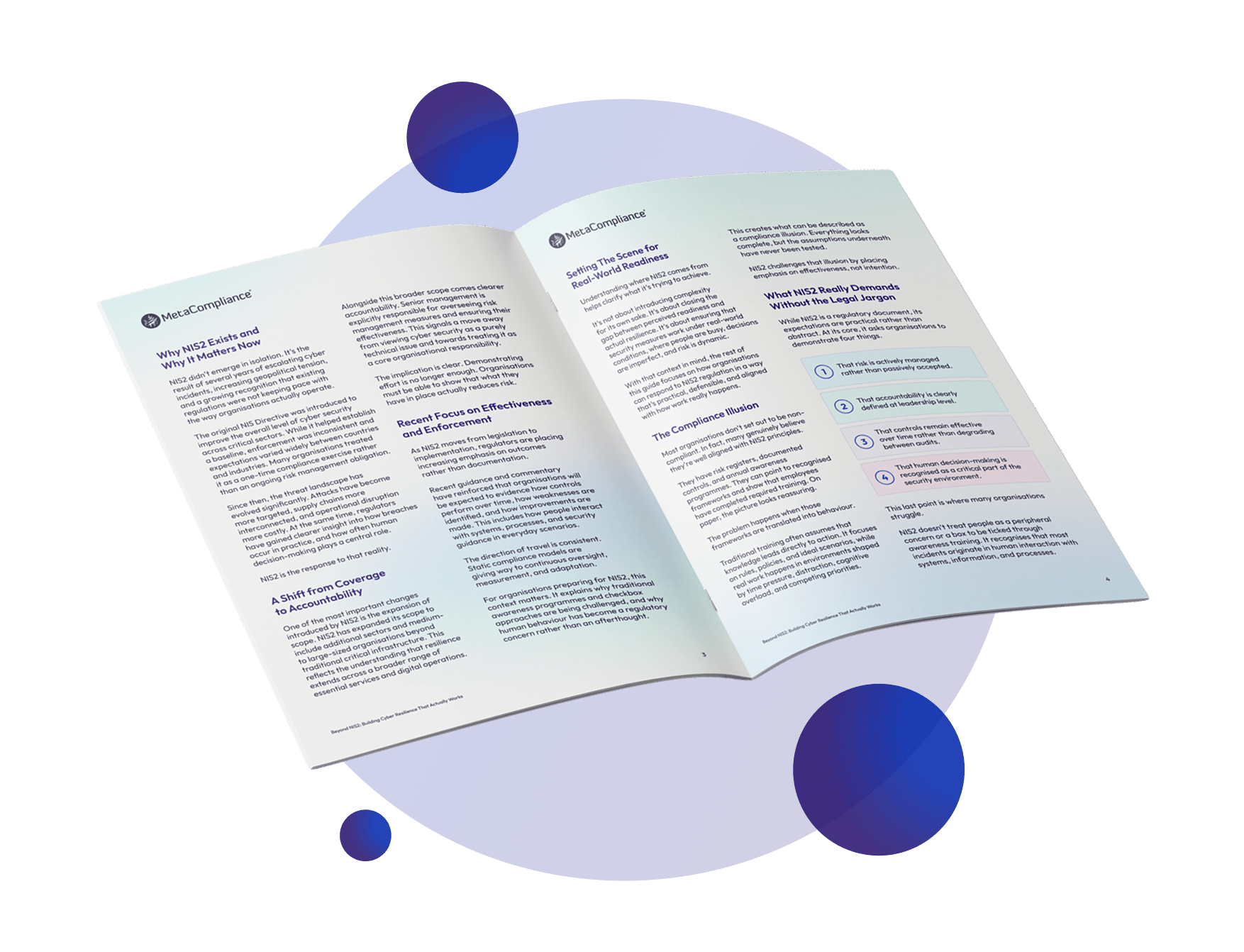

Risk is actively managed, not assumed

Leadership is accountable for effectiveness

Controls are proven to work over time

Human behaviour is part of risk management


Stay Ahead of Cyber Threats
Close the Gap Between
Policy and Behaviour
Understand what NIS2 really means in practice and how to bridge the gap between policy and real-world employee behaviour. Discover what “good” actually looks like and how to apply it across your organisation.